
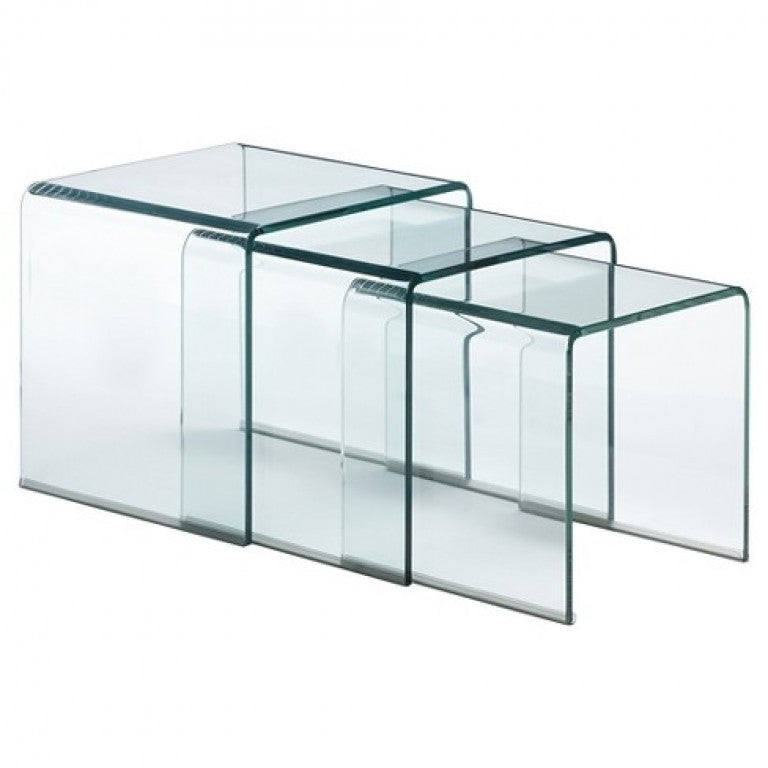
Nest of tables are a simple answer to a common problem: you need useful surface space, but you do not want several tables permanently occupying the room. A graduated set can sit together as one compact piece, then separate when guests arrive or when different seats need a nearby table.
For smaller living rooms, flats and multipurpose spaces, clear glass nesting tables are particularly effective because they provide flexibility without creating a heavy visual block.
Why nesting tables work in compact rooms
The biggest advantage is adaptability. When the tables are nested, their footprint is close to that of the largest table. When you need more space, the smaller pieces can move beside a chair, sofa or reading corner. Afterwards, they slide back beneath the larger table.
Clear glass also allows the flooring, rug and surrounding furniture to remain visible. This does not create more square metres, but it can help a small room feel calmer and less interrupted.
Measure the set in both arrangements
Do not check only the dimensions of the largest table. Think about where all three will stand when separated. Use masking tape or sheets of newspaper to mark the footprint of each piece. Test the arrangement you are most likely to use—for example, one table beside each end of the sofa and one next to an armchair.
Check walking routes, door swings and the space required to pull the smaller tables out. If the set will sit on a deep rug, make sure each table can move without catching or becoming unsteady.
Five practical ways to use a nest of tables
- One compact side-table group: keep all three together and use the layered edges as part of the design.
- Flexible entertaining surfaces: separate them for drinks and small plates, then nest them again after guests leave.
- A sofa-and-chair arrangement: place the largest table beside the sofa and move the smaller pieces to occasional seating.
- A display with breathing room: use one table for a lamp or plant and keep the others clear for practical use.
- A temporary work surface: move one table to where it is needed for a laptop or notebook, subject to the manufacturer’s usage guidance.
How to style clear glass nesting tables
Because the tables are transparent, a few carefully chosen objects usually look better than many small accessories. Try a compact lamp, a single sculptural vase or a short stack of books. Repeating one colour from the sofa, artwork or rug helps the arrangement feel connected to the room.
You can also create a layered display by positioning the tables slightly apart rather than fully nested. Varying the height of the objects prevents the group from looking flat, but leave enough clear surface for everyday use.
What to check before buying
- Individual dimensions: confirm that each table works beside the intended seat.
- Glass thickness and edge finish: review the product specification and care instructions.
- Total weight: substantial glass furniture may require two people to move safely.
- Nesting clearance: check that the smaller tables fit neatly beneath the largest.
- Floor protection: follow the manufacturer’s advice for hard floors and rugs.
Featured set: Clear Glass Nest of 3 Side Tables
The Clear Glass Nest of 3 Side Tables contains three graduated square tables formed from 12mm bent glass. The sizes are:
- Large: 42 × 42 × 42cm
- Medium: 38 × 38 × 38cm
- Small: 34 × 34 × 34cm
The smaller tables fit beneath the largest for compact storage. Their clear U-shaped profiles keep the surrounding floor and furnishings visible, making the set easy to combine with different colours and interior styles.
See more options in our nested glass tables collection.
Choosing between a nest and one larger table
A single coffee table gives you one generous central surface and can anchor the seating area. A nest of tables gives you several smaller surfaces that can move independently. Consider where people sit, how often you entertain and whether you prefer a permanent centrepiece or a flexible arrangement.
Some rooms benefit from both: a central coffee table for the main sofa and a compact nest for occasional seating. The key is to preserve clear routes and avoid adding furniture simply to fill an empty corner.
Frequently asked questions
Can nesting tables be used separately?
Yes. That flexibility is their main purpose. Place them where needed, then return the smaller tables beneath the largest when you want to recover floor space.
Are clear glass tables suitable for small rooms?
Clear glass preserves sightlines and allows flooring to remain visible, which can reduce visual clutter. You still need to measure the physical footprint and allow comfortable circulation.
How should I arrange three nesting tables?
Start with the largest table beside the main seat. Position the others only where they serve a clear purpose. For a decorative arrangement, stagger them slightly and keep accessories restrained.
A well-chosen nest of tables earns its place by adapting throughout the day. Measure both the nested and separated layouts, and you will end up with furniture that supports the room rather than crowding it.